Home Security Systems for foreign property owners in Rome and Lazio: a complete guide
Professional English-speaking engineering and remote security management for international investors, diplomats, and expats in Rome and Lazio.
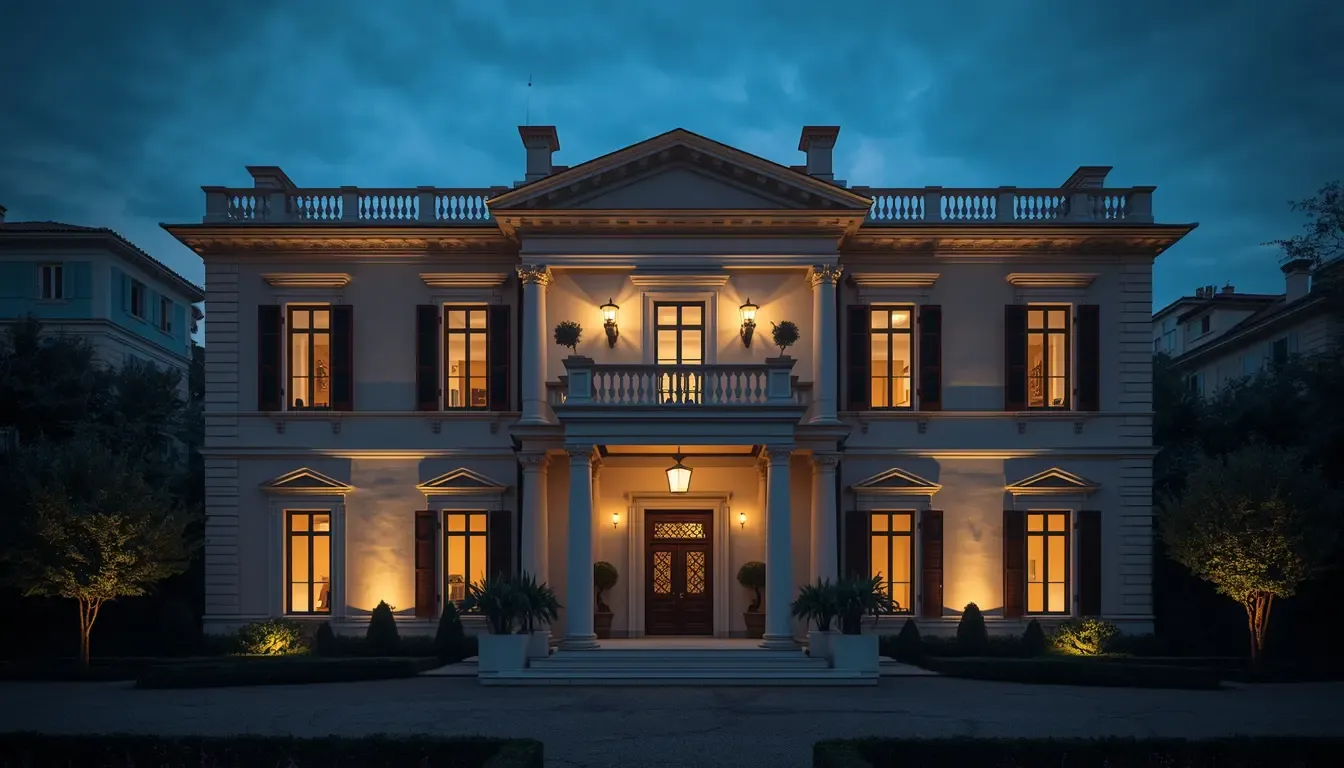
If you own a property in Rome or the Lazio region — whether a city apartment, a countryside villa or a holiday home — and you are not permanently based in Italy, securing your property is one of the most important decisions you will make.
Distance creates vulnerability. A home left unattended for weeks or months is statistically more exposed to intrusion, and the inability to respond quickly makes the consequences more severe. The good news is that modern security and home automation technology can put you in full control of your property, regardless of where you are in the world.
This guide explains what you need to know about home security systems in Italy, what options are available, and how to choose the right professional to design and manage the project.
Why foreign property owners in Italy need a specialist
Owning a property in Italy as a non-resident comes with specific challenges that a standard installer is rarely equipped to handle:
Language and communication. Most security companies in Italy operate exclusively in Italian. Navigating a technical project — from the initial briefing through to system programming and ongoing support — requires a professional who can communicate clearly in English at every stage.
Remote management requirements. A resident homeowner can respond to an alarm in minutes. A property owner based in London, New York or Munich cannot. This changes the design priorities entirely: the system must be built around remote monitoring, app-based management and automated responses rather than on-site reaction.
Aesthetic and regulatory compliance. Italian properties — particularly historic apartments and listed villas — often have strict aesthetic and structural constraints. In some cases, the local heritage authority (Soprintendenza) places limitations on what can be installed and how. A qualified engineer who understands both the technical and regulatory landscape is essential.
Integration with renovation works. Many foreign buyers purchase properties that require significant renovation. Integrating security and home automation infrastructure during the construction phase — rather than retrofitting it afterwards — dramatically reduces costs, improves the result and avoids damage to newly finished surfaces.
Engineering vs. Installation. A standard installer provides a product; a Chartered Engineer provides a solution. For high-end properties, you need a project that considers network security, encrypted protocols, and seamless integration with existing IT infrastructure—areas where a typical technician often lacks expertise.
The core systems to consider
Intruder Alarm System
An intruder alarm system is the foundation of any residential security project. For non-resident owners, the recommended approach is a combined system using both volumetric detectors (which detect movement inside the property) and perimeter detectors (which trigger before an intruder enters).
The most effective configurations for remotely managed properties include:
- Wired or wireless systems — choosing the right architecture. For permanent installations in owned properties, L.A. Engineering recommends hardwired systems as the preferred solution: more reliable, free from radio interference, lower long-term maintenance and more resistant to tampering. For properties where cable routing is not feasible, hybrid configurations are evaluated on a case-by-case basis. In either scenario, the system is professionally designed and installed — never a DIY solution.
- GSM/IP dual-path communication so that alarm events are transmitted both via mobile network and internet connection. If one channel fails, the other takes over
- App-based management for arming, disarming and receiving real-time alerts from anywhere in the world
- Integration with video surveillance so that an alarm event automatically triggers camera recording and sends a visual notification to your smartphone
For foreign owners, we recommend systems certified to EN50131 — the European standard for intruder alarm systems — which ensures a defined and verifiable level of performance.
Video Surveillance (CCTV)
A well-designed CCTV system serves two purposes: deterrence and evidence. The sight of professional cameras positioned at key points significantly reduces the likelihood of an attempted intrusion. In the event of an incident, high-quality footage is essential for identification and for insurance or legal purposes.
Key considerations for non-resident owners:
- IP cameras with remote viewing allow you to check your property live from any device, anywhere in the world
- High-resolution recording (4K) provides the image detail required for identification
- Secure storage with encrypted access protects your footage from unauthorised viewing
- Motion-triggered notifications alert you immediately if activity is detected at your property
The positioning of cameras requires careful design. Coverage of entry points, perimeter areas and parking is standard. For properties with gardens or large external areas, the design must consider viewing angles, focal lengths and lighting conditions at each location.
Home Automation
For a property owner who is away for extended periods, home automation is not a luxury — it is a practical tool for remote management and energy efficiency. A properly designed home automation system allows you to:
- Control lighting remotely or via programmed schedules — a property that appears occupied is significantly less attractive to potential intruders
- Monitor and regulate temperature to protect the building fabric, prevent damp and ensure the property is comfortable on arrival
- Manage shutters and blinds automatically or remotely
- Monitor energy consumption and control electrical loads to avoid exceeding your contracted power limit
- Receive alerts for anomalies such as water leaks, power failures or unexpected temperature changes
The most important feature for non-resident owners is the ability to manage everything through a single application that integrates the alarm system, cameras, lighting, climate and access control in one interface.
Video Door Entry (Intercom)
A professional video door entry system allows you to manage access to your property remotely — answering the door, speaking with visitors and granting or denying entry from your smartphone, whether you are in the next room or on the other side of the world. For properties with staff, rental arrangements or frequent deliveries, this level of control is particularly valuable. Advanced systems can be integrated with the alarm and CCTV systems so that a call at the door automatically displays camera footage on your device.
Our technology portfolio
As a professional engineering practice, we do not believe in "one size fits all." We select hardware based on reliability and security standards:
- Ksenia Security (Gold Partner): Our premier recommendation for luxury residential projects. Italian-made, fully encrypted, and the benchmark for high-end home automation.
- TVT Digital: Our choice for professional IP video surveillance, offering advanced AI analytics and robust performance.
- Legacy system takeover: We also provide engineering support to secure and optimize existing commercial systems (such as Dahua or Hikvision), ensuring they are properly configured for secure remote access.
The L.A. Engineering "Remote Owner Protocol"
Managing a property from London, New York, or Dubai requires more than just an app on your phone. It requires a rigorous technical protocol to ensure the system is always "up and running." Our protocol includes:
- System heartbeat monitoring: We configure your systems to self-diagnose and alert us of power failures or connectivity drops before they become a security risk.
- Cyber-Secured access: We move beyond basic setups. We implement encrypted cloud bridges or secure VPNs, ensuring your private video feeds and home data are protected from hackers.
- The "Technical Liaison" service: We act as your English-speaking primary contact on the ground, coordinating with local property managers or emergency services if a technical anomaly is detected.
The design process: what to expect from a qualified Engineering Practice
A security project for a residential property should follow a structured professional process. At L.A. Engineering, every project is developed through the following phases:
- Feasibility assessment - A site visit to evaluate the property's layout, existing infrastructure, aesthetic constraints and the client's specific requirements. For foreign clients, this is also the opportunity to discuss how the systems will be managed remotely and what level of automation is appropriate.
- System design - Preparation of a full technical project including system architecture, component specifications, cable routing plans, electrical sizing calculations and compliance documentation. The design phase is where the quality of the final result is determined.
- Site supervision during works - Where possible, and particularly in the case of renovation projects, continuous presence on site during the installation phase ensures that all preparatory works are carried out correctly and that no remedial works are required after completion.
- Programming and commissioning - Full configuration of all systems, including app setup, user profiles, notification settings and integration between platforms. For remote clients, commissioning includes a complete remote handover so that the owner is fully operational from day one.
- Documentation and ongoing support - Every project is fully documented. All system configurations, passwords and technical specifications are provided to the client in a format that can be accessed and shared with any future service provider.
A real example: Trastevere, Rome
One of our projects involved a complete home automation and security installation for an international private client in the Trastevere neighbourhood of Rome. The brief included the design of an integrated intruder alarm and home automation system, developed in close collaboration with the project architect to ensure that the technical installation met the high aesthetic standards of the property.
The resulting system gives the owners — who are based abroad — full control of their Rome apartment through a single application: monitoring the alarm, managing lighting scenes and dimmer levels, controlling the shutters, regulating the internal temperature and tracking energy consumption, all from their phone.
This is precisely the kind of project L.A. Engineering specialises in: technically rigorous, aesthetically considered and designed around the real needs of a client who is not always present.
You can view the full project details in our portfolio: Integrated home automation and security — Trastevere, Rome.
Frequently Asked Questions
Yes. We regularly work with international clients and conduct initial consultations remotely. Where a site visit is required, we coordinate timing to coincide with the client's presence in Italy or arrange a visit independently and report back with findings and recommendations.
Yes. All project documentation, briefings, commissioning and ongoing support can be conducted entirely in English.
This is the ideal scenario. Installing security and home automation infrastructure during the construction phase significantly reduces costs and produces a cleaner, more integrated result. We offer full coordination with the building contractor.
We specialize in high-end residential projects throughout the Lazio region. Our primary activity is centered in Rome’s most prestigious neighborhoods (such as Aventino, Trastevere, Parioli, and Olgiata) as well as exclusive retreat locations like the Castelli Romani, Viterbo, and the Argentario coastline. Projects elsewhere in Italy are evaluated on a case-by-case basis.
Contact us directly by phone, WhatsApp or email. We will arrange an initial consultation to discuss your requirements, visit the property and provide a detailed proposal.